LINX Procedure FAQs
What are the health concerns for those who choose to self-treat severe cases of GERD?
When reflux continues without proper treatment, it can lead to permanent scarring of the esophagus that makes it difficult to swallow. The chronic inflammation of the esophagus can cause changes that lead to cancer of the esophagus. The stomach contents can also reflux into the lungs, causing permanent scarring and fibrosis.
What levels of severity necessitates surgical options?
Anybody who is diagnosed with GERD by a positive pH study is a candidate for surgery. Medications and surgery all carry their own risks and benefits, so it is important to have an in-depth discussion with a surgeon to decide if surgery is the necessary option. Generally, patients who have symptoms that are not well-controlled despite medication or who have precancerous changes in their esophagus should strongly consider surgery.
What is the LINX® Reflux Device and why is it so effective?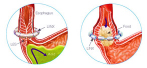
The LINX® device is a flexible band of magnetic titanium beads that is placed around the lower esophageal sphincter (LES) to help make it stronger and prevent reflux. The magnets make the device dynamic so that it can open and close just like the native sphincter. This allows it to resist opening inappropriately and prevents reflux of acidic gastric contents into the esophagus. However, it is able to open under the appropriate conditions such as when swallowing food or when there is a need to belch.
How does this method of treating GERD differ from other iterations?
The main surgical option for GERD prior to the development of the LINX® was a fundoplication, which involves wrapping the floppy part of the stomach around the esophagus to recreate the lower esophageal sphincter. The main difference is that fundoplication is static whereas the LINX® is dynamic. The wrap cannot open and close like the LINX®.
Fundoplication is effective in controlling reflux symptoms but can also have side effects that arise from gas not being able to get out of the stomach. This includes bloating, cramping abdominal pain, diarrhea and increased flatulence. Because the LINX® is dynamic, it can open to allow gas to escape the stomach just like the native LES.
How does this way of treating severe GERD impact future developments in dealing with this disease?
By providing an effective surgical treatment for GERD that has fewer side effects than the traditional surgical option, more people may seek surgical intervention which could help decrease the consequences of uncontrolled GERD, including esophageal cancer.
For additional information, please call 419.423.GERD or email heartburn@bvhealthsystem.org.